
Access
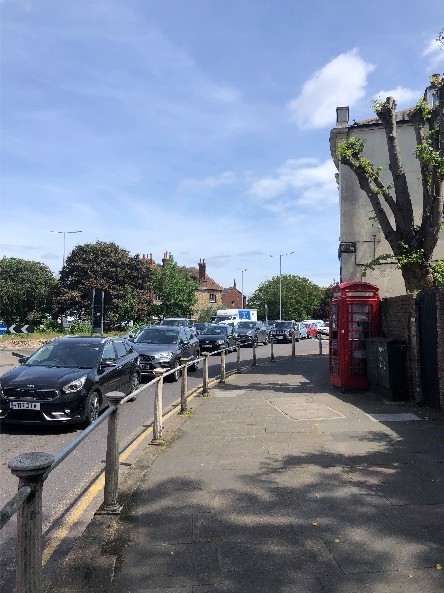
 Wincheap, (the A28) is a severely congested strategic route into Canterbury, which
experiences regular traffic queues and high pollution due to limited alternatives for entering
the city from the south and west of Kent and beyond. It has constrained junctions and narrow
carriageways which cannot be widened as it is an ancient road dating back to the 13th
century. The houses (many listed) and businesses on Wincheap are located near to the
roadside leaving no room for cycle paths or for widening the road.
The Local Plan 2024 proposals would almost double the number of households in the ward,
generating thousands of additional daily vehicle movements and placing intolerable pressure
on an already overstretched road network.
There has not been meaningful engagement with local community prior to publication of the
Local Plan 2024 and transport evidence was produced after planning decisions were taken.
The road infrastructure proposals are ambiguous, lack clarity and credibility. They
demonstrate no working knowledge of how the local roads are used. The traffic modelling
carried out by the proposed developer uses unreliable and optimistic assumptions. Access
arrangements via Hollow Lane (the primary exit from the development) and Homersham fail
to meet Kent Design standards and are highly unsuitable for both construction traffic and
long-term use.
Traffic modelling relies on unrealistic assumptions about modal shift to walking, cycling and
bus travel, despite known constraints, car ownership levels and constrained public transport
capacity. Cumulatively, the proposals would worsen congestion and air quality.
Wincheap, (the A28) is a severely congested strategic route into Canterbury, which
experiences regular traffic queues and high pollution due to limited alternatives for entering
the city from the south and west of Kent and beyond. It has constrained junctions and narrow
carriageways which cannot be widened as it is an ancient road dating back to the 13th
century. The houses (many listed) and businesses on Wincheap are located near to the
roadside leaving no room for cycle paths or for widening the road.
The Local Plan 2024 proposals would almost double the number of households in the ward,
generating thousands of additional daily vehicle movements and placing intolerable pressure
on an already overstretched road network.
There has not been meaningful engagement with local community prior to publication of the
Local Plan 2024 and transport evidence was produced after planning decisions were taken.
The road infrastructure proposals are ambiguous, lack clarity and credibility. They
demonstrate no working knowledge of how the local roads are used. The traffic modelling
carried out by the proposed developer uses unreliable and optimistic assumptions. Access
arrangements via Hollow Lane (the primary exit from the development) and Homersham fail
to meet Kent Design standards and are highly unsuitable for both construction traffic and
long-term use.
Traffic modelling relies on unrealistic assumptions about modal shift to walking, cycling and
bus travel, despite known constraints, car ownership levels and constrained public transport
capacity. Cumulatively, the proposals would worsen congestion and air quality.
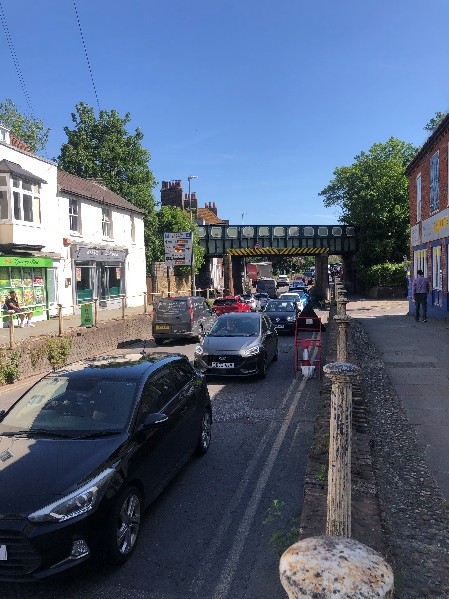
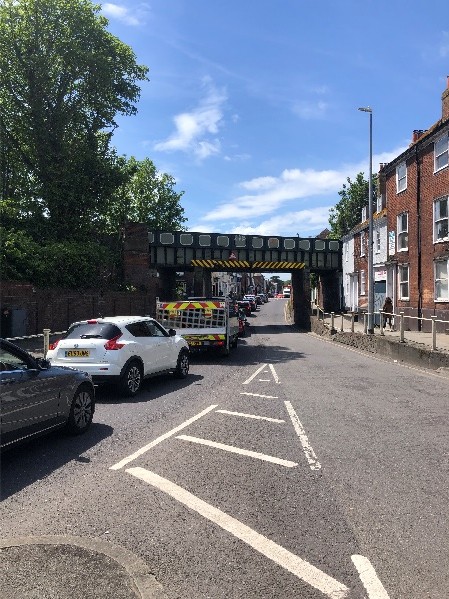
Wincheap (the A28) is a key route into Canterbury bringing traffic into the city centre from the from the west of Kent (from the direction of Ashford) and south of Kent (from the direction of Dover) and beyond. Significant traffic jams regularly occur on this road as Canterbury is a compact city with road building constrained by the historic nature of the city. There are not many alternative routes, so traffic tends to funnel through this area. A large concentration of traffic lights at the A2/A28 junction, the single carriageway through Wincheap and under Canterbury East Railway bridge all contribute to the daily queues and high levels of pollution, especially at morning and evening rush hours. The Local Plan 2024 proposes additional houses at:
- Merton Park (1,950)
- Langton Lane (14)
- Nackington Police Station (20)
- Wincheap Industrial Estate (1,000)
- Cockering Farm (36)
- Milton Manor (95)
There is unsuitable and inadequate means of vehicular access for construction and occupation phases. Kent Design Guide Section 2 expects a development of this scale to be accessed by a local distributor road capable of catering for all vehicle types up to pantechnicon. A typical carriageway width is 6.75m (within a range of 6m to 10.5m), with a typical verge width of 2m (range .5m to 5m) and a typical footway/cycleway of 3m (range 1.8m to 5m). The consultation document states that the primary access to the site would be from Wincheap via Hollow Lane with Hollow Lane converted to one-way working between Wincheap and its junction with Hollowmede, and upgrades to Homersham including the creation of off-street parking bays. Hollow Lane is, in origin, a country lane and is fundamentally not suitable for accessing a development of the scale proposed. The section between Wincheap and the junction with Hollowmede has a carriageway width varying between around 5.5m to around 4.3 with sections of on-street parking, no verges and footways of typically around 1.2m on both sides. There is also an entrance to the local primary school at the junction with Hollowmede. Predominantly terraced housing is set on both sides of Hollow Lane from the back edge of the footways i.e. there are no front gardens. There is, therefore, no scope for bringing it up to the design standards of a local distributor road. Furthermore, significantly increasing the volume and type of traffic on this road would cause considerable harm to the amenities and health of residents through increased noise, dust, air pollution and reduced pedestrian safety, even if traffic flow was restricted to one-way. The implications for the current on-street parking are not mentioned in the consultation document but if, as seems likely, it would have to be removed what is the alternative arrangement? The section of Hollow Lane from the junction with Hollowmede to entry with the site would be two-way traffic but the carriageway width is only around 4.5m with restricted scope to widen it, let alone provide footways, cycle paths and verges.
Read more in our representation for the Regulation 19 Consultation.
Click to enlarge